Information unaudited Information ungeprüftGeneral information
As a long‑term‑oriented financial institution, the LLB Group is committed to leaving behind an environment that is as intact as possible, along with stable social conditions for future generations. Sustainable business management is part of our performance mandate and corporate identity.
Liechtensteinische Landesbank limited company (LLB) – founded in 1861 – is the longest-standing financial institution in the Principality of Liechtenstein. The Principality of Liechtenstein is our majority shareholder and pursuant to the “Gesetz über die Liechtensteinische Landesbank” (Law on the Liechtensteinische Landesbank – LLBG) holds at least 51 per cent of the capital and voting shares. Our share has been listed on the SIX Swiss Exchange under the symbol LLBN (security number 35514757) since 1993. We have a banking presence in each of the market regions of Liechtenstein, Switzerland and Austria: Liechtensteinische Landesbank Aktiengesellschaft, LLB (Schweiz) AG and Liechtensteinische Landesbank (Österreich) AG. We also have two competence centres in the areas of Asset Management and fund services.
The Law on the Liechtensteinische Landesbank (LLBG) and the “Liechtensteinische Öffentliche-Unternehmen-Steuerungs-Gesetz” (ÖUSG) (Law on the Control and Supervision of Public Enterprises) form the essential foundations for the business activity of the LLB Group. Article 3 of the LLBG sets out the purpose of the bank and, as such, defines the core of our banking group’s business model. The aim of the Landesbank is therefore to operate in the sense of a universal bank, conducting banking transactions of all kinds at home and abroad. It is also stipulated by law that the business activities of the LLB Group are intended to promote the economic development of Liechtenstein, meet credit needs appropriately and enable clients to invest and manage their funds securely and profitably.
The “Beteiligungsstrategie der Regierung des Fürstentums Liechtenstein für die Beteiligung an der Liechtensteinischen Landesbank AG” (Participation Strategy of the Government of the Principality of Liechtenstein for the Participation in Liechtensteinische Landesbank AG) also stipulates that the LLB Group must conduct its business activities in accordance with ethical, social and environmental objectives. We fulfil this special obligation by offering a diverse portfolio of products and services, applying sustainable standards to our offerings, our infrastructure and procurement, and engaging broadly in society. As an employer, we are committed to a corporate culture that is characterised by partnership-based cooperation.
1 Bases for preparation
1.1 General basis
Our Sustainability statement has been prepared for the entire LLB Group on a consolidated basis. The scope of consolidation for sustainability reporting matches that for financial reporting (see chapter Scope of consolidation). Only the reporting in accordance with the Taxonomy Regulation is carried out in accordance with the legal requirements on the basis of the regulatory scope of consolidation (see chapter EU Taxonomy).
On 9 January 2025 Liechtensteinische Landesbank Aktiengesellschaft acquired 100 per cent of the shares in Zürcher Kantonalbank Österreich AG (ZKB Österreich), which has offices in Salzburg and Vienna. The new Group company was merged with Liechtensteinische Landesbank (Österreich) AG in the second half of 2025 – see chapter Company acquisitions. The Sustainability statement takes into account the former ZKB Österreich as of 1 January 2025.
As well as our own business operations, the Sustainability statement also covers the upstream and downstream value creation chain. As a result of our business model, we concentrate our strategies, measures, goals and key figures on our own business operations and the downstream value chain (see section Our value chain).
We do not have to withhold any information whatsoever on the grounds of intellectual property, know-how or innovation results. Furthermore, we have not made use of the exemptions provided for in Directive 2013/34/EU, which means that we have not withheld any information regarding upcoming developments or matters under negotiation.
1.2 Information in relation to specific circumstances
1.2.1 Reporting standard
We have prepared this Sustainability statement in accordance with the following guidelines:
- Directive (EU) 2022/2464 as regards corporate sustainability reporting (Corporate Sustainability Reporting Directive, CSRD);
- Delegated Regulation (EU) 2023/2772 as a supplement to Directive 2013/34/EU through standards for sustainability reporting (European Sustainability Reporting Standards, ESRS);
- Regulation (EU) 2020/852 on the establishment of a framework to facilitate sustainable investment and amending Regulation (EU) 2019/2088 (Taxonomy Regulation) together with the supplementary implementing regulations.
The CSRD has been incorporated into the Liechtenstein Persons and Companies Act (PGR). Consequently, the reporting also covers the content requirements of the PGR. We have not included any information in the Sustainability statement based on other legislation or generally accepted standards for sustainability reporting.
1.2.2 Report content
The thematic scope of this Sustainability statement is based on a materiality assessment conducted in accordance with the double-materiality principle. A detailed explanation of this process can be found in the section Double materiality assessment. The ESRS index in the Appendices to the Sustainability statement shows which disclosure obligations are covered by this report. The detailed quantitative disclosures on environmentally sustainable assets in accordance with the Delegated Regulation (EU) 2021/2178 can also be found in these Appendices.
1.2.3 Time horizons
As provided for in the ESRS, we use time horizons in the Sustainability statement and in the double materiality assessment so that we can report in more precise detail on the impacts, risks and opportunities associated with the LLB Group’s business model: We used the following definitions during the reporting year:
- short-term time horizon – specified reporting period (01.01.2026 to 31.12.2026);
- medium-term time horizon – from the end of the short-term time horizon to up to ten years;
- long-term time horizon – over ten years.
We have modified the time horizon definitions compared to the previous year. The short-term time horizon corresponds to the provisions of the ESRS. The long-term time horizon is based on the guidelines of the Final Report of the European Banking Authority (EBA) titled “Guidelines on the Management of Environment, Social and Governance (ESG) Risks” (EBA/GL/2025/01). In accordance with this, banks should consider a “long-term time horizon of at least ten years” when assessing the materiality of ESG risks (point 13). This provision takes into account the fact that material ESG risks commonly only become apparent over longer periods of time, for example on account of long-term climatic changes, technological developments or changes in market demand or regulatory conditions. Due to the adjustment of the long-term time horizon, the medium-term time horizon was also extended by five years compared to ESRS specifications.
1.2.4 Assumptions and estimates
We prefer to use actual data in the sustainability reporting. If this is not available, data is estimated. Assumptions and estimates are particularly relevant in the calculation of greenhouse gas emissions (hereinafter referred to as GHG emissions). For buildings that do not belong to the bank, the necessary data is not always available. In these cases, the data is estimated, for example on the basis of the number of employees and proxies (such as local electricity mix), by the myclimate foundation. Particularly when it comes to historic GHG emissions of the former ZKB Österreich, assumptions were made to determine figures for the reference year of 2019 where data was not available.
For financed GHG emissions, we use the calculation standard of the Partnership for Carbon Accounting Financials (PCAF). This also involves estimating individual values. Since not all of our counterpartiesʼ GHG emission data for the business year 2025 are available at the time of our reporting, in the future the GHG value will be specified using the reported values. Detailed information on the calculation methods, assumptions and estimates, the resulting measurement uncertainties and measures to improve accuracy can be found in the section Greenhouse gas emissions.
The estimates used in the calculation of the financed emissions of our mortgage portfolio are imprecise. The calculation is performed by the consulting firm Wüest Partner AG, which uses a multidimensional model for this purpose. Missing data is estimated on the basis of building characteristics (e.g. floor area, heaters) or supplemented with data available in the public domain. In order to minimise the risk associated with estimates, the precautionary principle is generally applied (for example, if there is no information on heaters, stochastic simulation methods are used). All calculations are checked for plausibility by our internal experts.
1.2.5 Changes compared to the previous year (2024)
During the reporting year, we adjusted the reference value for GHG emissions for the baseline year of 2019. This change is based firstly on the integration of the former ZKB Österreich into our balance sheet and secondly on the fact that we took into account government bonds and third-party funds for the first time when calculating our financed emissions. To ensure comparability, this adjustment was also made retrospectively for the previous year. The updated reference value and the deviation to the previous value are outlined in the section Information on the baseline year.
1.2.6 Inclusion of information by reference
The following information has been included in the Sustainability statement by reference:
Disclosure requirment | Description | Reference |
ESRS 2, para. 40b | Breakdown of total revenue | |
ESRS S1, para. 55 | Net revenue as per financial statements | |
ESRS S1, para. 50d f) | Total number of employees according to financial statements |
1.2.7 Reporting errors in previous reporting periods
Due to an internal error, the sponsoring key figures indicated in our 2024 Sustainability statement were inaccurate. The corrected values and the deviations compared with the key figures previously published are presented in the section Key figures relating to our role as a sponsor.
2 Sustainability in our strategy and business model
The “Beteiligungsstrategie der Regierung des Fürstentums Liechtenstein für die Beteiligung an der Liechtensteinischen Landesbank AG” (Participation Strategy of the Government of the Principality of Liechtenstein for the Participation in Liechtensteinische Landesbank AG) creates an express link between commercial objectives and sustainability targets. Accordingly, in defining and implementing its corporate strategy, the LLB Group must assume its ethical and social responsibility towards its employees, business partners, clients and Liechtenstein society and support ambitious climate targets. We take these requirements into account with our business model and strategy.
2.1 Our strategy
Our corporate strategy ACT-26 is based on the guidelines set out in the “Participation Strategy of the Government of the Principality of Liechtenstein for the Participation in Liechtensteinische Landesbank AG”. ACT-26 comprises three core elements:
- Growth: We are once again aiming for a significant increase in business volume during the five-year strategy period – on the one hand through accelerated organic growth and on the other through targeted acquisitions. The basis for this is provided by the security and stability of the LLB Group, combined with superb investment expertise and investment performance for both private and institutional clients. In addition, our aim is to further expand our position in private banking and corporate client business in Liechtenstein and Switzerland (see chapter Markets and clients).
- Efficiency: We attach great importance to providing each client with the best possible advice on an individual basis. To achieve this, we use a hybrid model that combines automation and digital availability with traditional advisory services. The client platform is continuously modernised and the range of digital products and services continuously expanded for all customer groups. We use agile methods to enable us to react quickly to altered client needs. At the same time, we are simplifying, standardising and automating our core processes. This is enabling us to increase efficiency and raise scalability (see chapter Digitalisation and infrastructure).
- Sustainability: Sustainability has always been a high priority at LLB. This is why we are striving to achieve net zero greenhouse gas emissions by 2040 – ten years earlier than the majority of our competitors. Along the way, we will be reducing both our own greenhouse gas emissions as well as those of our client portfolios. In addition, we are expanding our range of environmentally and socially responsible products.
The core element of sustainability also contains a clear commitment to social and governance issues. This includes the support of the Future Foundation of Liechtensteinische Landesbank AG, the commitment to society and economic development in the region as well as the claim to be a family-friendly and excellent employer. We are also committed to a value-orientated approach to corporate management, transparent corporate governance, comprehensive sustainability reporting and clear guidelines and processes to promote equal opportunities within the company.
We have set ourselves ambitious, quantitative targets in all core areas of our corporate strategy. The aim is to achieve the objective in the core area of sustainability in intermediate steps: By 2026, the objective is to achieve a reduction of at least 30 per cent in GHG emissions arising from LLB funds, asset management, lending and our own investments (own investment refers to the management of the bank’s own financial resources), while for banking operations we are striving for at least 20 per cent. By 2030, we aim to reduce our GHG emissions by 55 per cent across the Group. This figure includes emissions that can be traced back to our banking operations, our main banking products and our own investments. An assessment of banking operations and product groups with regard to the sustainability goals defined can be found in the section Measures relating to climate change policies.
We have defined further sustainability targets with reference to our employees. We report on the progress we have made in this area in the section Targets relating to our own workforce.
Overview of the sustainability strategy
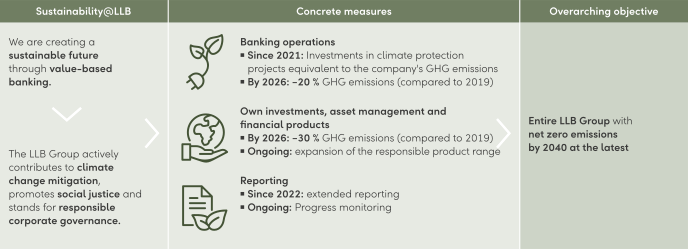
We currently see the lack of availability and quality of data from our counterparties as a key challenge for our sustainability strategy. We need this data to enable us to calculate key performance indicators and monitor our target attainment. To improve this situation, we launched an internal ESG database, which we continuously develop (see section Risk management in connection with the reporting).
From our perspective, the public debate surrounding the issue of sustainability is a further challenge for our sustainability strategy; it causes uncertainty among clients and other stakeholders with regard to the relevance and credibility of ESG information. This situation is exacerbated by partially contradictory political signals, current industry trends (e.g. withdrawal of large banks and asset managers from ESG initiatives) and an ultra-dynamic regulatory environment (e.g. EU Omnibus). In this context, it is becoming increasingly challenging to retain the trust of various stakeholders and achieve our ambitious sustainability targets.
The process of harmonising the former ZKB Österreich with our Group-wide sustainability standard is still in the implementation phase. The GHG emissions are taken into account comprehensively for the purpose of this Sustainability statement; however, the underlying processes and structures have yet to be fully standardised. For example, the consistent application of our Group-wide sustainability approach for investment decisions is not currently guaranteed across all areas.
2.2 Our business model
The LLB Group is characterised by a focused, client-orientated business model and a diversified earnings structure. Our business model is based on two market divisions:
- The Retail & Corporate Banking division encompasses the universal banking business in the home markets of Liechtenstein and Switzerland and focuses on the entire scope of the banking and financial services business. Traditionally, the savings and mortgage lending business has played a significant role in this, as have private financial planning and occupational pensions. Asset management and investment advisory services for private banking clients in German-speaking countries (Liechtenstein/Switzerland/Germany) are also pivotal.
- The International Wealth Management division focuses on international private banking clients as well as institutional and fund clients. In private banking, the focus is on the Austrian and rest-of-Europe markets as well as on the growth markets in Central Europe and the Middle East. Investment advisory services, asset management, asset structuring, lending and financial and pension planning are our core competencies for these clients. In the fund business and institutional banking areas, our clientèle includes fiduciaries, asset managers, fund managers, family offices, insurance companies, pension funds and public institutions. Our key markets are Liechtenstein, Switzerland, Austria and Germany.
Further information on our market divisions can be found in the Segment reporting of the LLB Group. Generally speaking, we do not accept clients domiciled in markets that have regulatory barriers.
In addition to a positive and safe working environment, our employees benefit from continuous further training and opportunities for personal development. The LLB Group attaches great importance to promoting a good corporate culture that emphasises integrity and taking the long-term view. Our aim with this approach is to maintain the motivation and satisfaction of our employees at a high level, which, in turn, has a positive effect on service quality and customer loyalty. We also pay attention to the well-being of our employees by offering flexible working time models and various company health programmes.
Looking at the bigger picture of our partners and non-governmental organisations (NGOs) as well as the wider public, we are involved in numerous social and ecological projects. Through targeted sponsoring activities, we provide support for initiatives with the aim of making a contribution towards development and prosperity in the region. Owners and investors benefit from the LLB Group’s transparent communication and financial base, which is characterised by an attractive dividend policy and an adequate equity base. This enables us to ensure stable returns over the long term and strengthen confidence in our bank.
2.3 Our value chain
For sustainability reporting, we make a distinction between the upstream and downstream value chain and our own business operations. We understand an upstream value chain to be all those third-party services that we need to enable us to offer our products and services. These include our suppliers, in particular IT hardware dealers and external IT service providers, as well as consultancy firms. Responsibility for the procurement of these services lies with the Group Sourcing and Procurement organisational unit. Other financial institutions (especially banks) and central banks are important as sources of refinancing.
Our own business operations include all internal resources and processes that directly or indirectly serve to create economic value. Our resources include our banking infrastructure (buildings, IT hardware, company cars) as well as our employees. The internal functions that make a significant contribution to the creation of economic value include the market divisions as well as the Corporate Center. This brings together all organisational units that coordinate, support and monitor Group-wide business activities, processes and risks (for example product management, asset management, finance, credit and risk management). These are supplemented by departments such as Marketing, Communications or Human Resources.
The downstream value chain includes our banking products and services for various client segments and stakeholder groups. These include, on the one hand, savings and mortgage products, investment advice, asset management, financial planning and occupational pensions for Retail & Corporate Banking clients and, on the other hand, investment advice, asset management, asset structuring, financing and financial and pension planning for private banking clients as well as institutional and fund clients. In accordance with our statutory supply mandate, our diverse range of products and services makes appropriate provision for public and private borrowing needs and enables domestic and foreign clients to invest and manage their funds securely and profitably.
There are significant impacts, risks and opportunities for us particularly in the downstream value chain and in our own business operations. This is the reason why our sustainability strategy focuses on these two areas. Our upstream value chain is less important since, as a bank, we have a low consumption of resources compared to other industries. For example, GHG emissions from purchased goods and services as well as upstream transport and distribution account for less than 0.1 per cent of the LLB Group’s total emissions.
2.4 LLB Group employees
As of 31 December 2025, we employ 1ʼ523 people, of which 902 work in Liechtenstein. This makes us one of the largest employers in Liechtenstein. Our employees primarily come from our defined target markets of Liechtenstein, Switzerland, Austria and Germany.
Employees by geographic region
Number of employees | 31.12.2025 | 31.12.2024 |
Liechtenstein | 902 | 932 |
Switzerland | 215 | 234 |
Austria | 358 | 271 |
Germany | 32 | 37 |
UAE | 16 | 27 |
Total number of employees | 1’523 | 1’501 |
2.5 Stakeholders’ interests and views
For us, sustainability as a corporate responsibility means meeting the expectations of the various internal and external stakeholder groups. We are in regular dialogue with the various stakeholders who influence our business activities and over whom we have influence – in person, via electronic media, at information events or at work meetings and conferences. The purpose of this engagement is to establish and maintain long-term relationships with our most important stakeholders, strengthen trust in the LLB Group and stay informed about possible risks and opportunities at an early stage.
In the reporting year there was no change in our sustainability strategy as a result of feedback from our stakeholders. We take the results of our consultation processes into account when defining measures – for example, through the initiatives we have taken as a result of the employee survey. The Group Executive Board is kept continually informed about the input from the stakeholder channels by the departments responsible. The Board of Directors does not as yet receive any systematic information regarding the interests of stakeholders.
2.5.1 Clients
We use various channels – for example within the context of surveys – to record client needs and satisfaction levels. Complaints can be recorded via the regulatory complaints management system. Client advisers also have the option of documenting client satisfaction in the Avaloq core banking system.
2.5.2 Employees
Our employees also have various channels at their disposal through which they can express their concerns. These include regular employee surveys, the Representation of Employees of the LLB headquarters in Vaduz and the works council of LLB Österreich – see chapter Own workforce. In terms of the interests, standpoints and rights of our employees, we have not made any amendments to our business model.
2.5.3 Partners and NGOs
We maintain dialogue with partners and NGOs through our membership of associations and clubs. Examples of these are the Liechtenstein Bankers Association (LBV), the Liechtenstein Chamber of Commerce and Industry (LIHK), the Asset Management Association Switzerland (AMAS) and the Association of Austrian Banks and Bankers (BV). As part of charitable campaigns, we often work in cooperation with local NGOs, such as the Liechtenstein Society for Environmental Protection (LGU) and the Special Education and Care Centre of the Principality of Liechtenstein (HPZ, Heilpädagogisches Zentrum Liechtenstein).
2.5.4 The public
We also maintain contact with the media and business journalists in our market regions, separate to ad hoc publicity and the annual report and analysts’ press conference. We make every effort to answer their questions in a transparent and timely manner. As the organiser or sponsor of various events, we strengthen our relationship with the local population. We are also assessed by ESG rating agencies. We identify relevant fields of action and develop targeted measures based on the results of these assessments.
2.5.5 Owner and investors
The Principality of Liechtenstein is our majority shareholder. We maintain a regular dialogue with representatives of the Government and the Landtag (Parliament). We have an obligation to inform the Principality of Liechtenstein about the course of business. Against this backdrop, a meeting is held at least twice a year between the Chairman of the Board of Directors, the Group CEO and the Prime Minister of the Principality of Liechtenstein. The Chairman of the Board of Directors takes on board any suggestions made by the Government during the course of these discussions. Once a year, the Board of Directors and the Group Executive Board invite the entire Government to a roundtable discussion. Like all core elements of our ACT-26 corporate strategy, the subject of sustainability is also addressed at this discussion.
2.6 Membership of industry initiatives
Membership of various industry initiatives forms a central component of our sustainability strategy. This enables us to put forward our ideas to the financial industry and get a valuable impetus for the continued development of our sustainability management. As of 31 December 2025, we are a member of the following initiatives:
- Principles for Responsible Banking (PRB): The PRB is an initiative for responsible banking and provides a single framework for a sustainable banking industry. It was developed as part of an innovative partnership between banks around the world and the Finance Initiative of the United Nations Environment Programme.
- The Climate Pledge: The Climate Pledge is a voluntary commitment to implement the Paris Climate Agreement ten years earlier and consequently be CO2-neutral by 2040.
- Principles for Responsible Investment (PRI): The aim of the United Nations Finance Initiative is the responsible management of securities.
- UN Global Compact: As a United Nations initiative, the UN Global Compact pursues the vision of an inclusive, sustainable global economy that benefits all people, communities and markets. To make this happen, it provides support for companies to pursue a responsible approach to doing business on the basis of ten universal principles, covering human rights, labour standards, environmental protection and anti-corruption practices, among other things.
We have been a partner of the Swiss Climate Foundation since 2012 and are thus part of a committed network of companies that combines financial resources with expertise in order to provide targeted support for innovative and climate-positive projects initiated by small- and medium-sized enterprises (SMEs) in Switzerland and Liechtenstein. As part of the advisory function we perform, we actively contribute our expert knowledge to the allocation of funding and the strategic focus of the Foundation.
Up until the disbanding of the membership-based organisation in 2025, we were part of the Net-Zero Banking Alliance (NZBA) of the United Nations. As a member of this international initiative, we have joined forces with other financial institutions to finance the economic transition to net zero emissions by 2050 at the latest. We are currently monitoring the NZBA’s restructuring to a framework and will review our future positioning in due course.
3 Sustainability governance
Our governance structure for sustainability facilitates the efficient implementation of the sustainability strategy and ensures that sustainability aspects are taken into account at all hierarchical levels. Sustainability governance is regulated in the “Sustainability” Group directive. This directive also describes how we deal with certain sustainability risks, in particular greenwashing risks. We apply the provisions of the Sustainability Directive to our own business operations as well as to our upstream and downstream value chains.
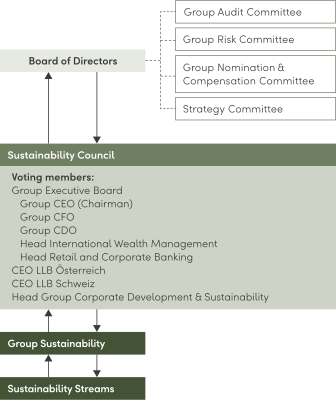
Overview of our sustainability and governance structure (as at 31.12.2025)
3.1 Role of the Board of Directors
The Board of Directors of Liechtensteinische Landesbank Aktiengesellschaft (hereinafter the Board of Directors) consists of seven people. On the basis of their education, professional background and experience, the members contribute various complementary skills and abilities. One area of focus is on the specialist knowledge of the financial services industry as well as knowledge of the Liechtenstein economy and corporate management. With two women on the Board, the proportion of women was 29 per cent at the end of 2025. The employees of the LLB Group are not represented on the Board.
On the initiative of the Chairman of the Board of Directors Georg Wohlwend, on 22 November 2024 the entire Board of Directors attended an internal LLB training session on regulatory requirements for sustainability. The focus was on scientific bases, political goals and measures, the strategic orientation of the LLB Group as well as the latest legal and regulatory developments and challenges. When selecting the topics, care was taken to cover all aspects relevant to banks in terms of potential impacts, risks and opportunities. Targeted training and information ensure that knowledge of sustainability is continually expanded within the Board of Directors. In addition, internal experts are available to the members of the Board of Directors to help with specific enquiries on sustainability issues. Another sustainability training session for members of the Board of Directors is planned for 2026.
All seven members of the Board of Directors of Liechtensteinische Landesbank Aktiengesellschaft are non-executive members (100 %). Pursuant to Art. 21 of the Liechtenstein Banking Law in connection with Art. 10 of the Law on Liechtensteinische Landesbank (LLBG), various special bodies are constituted for the overall direction, supervision and control of a bank on the one hand, and for the Board of Management and Corporate Management on the other hand. No member of the Board of Directors is allowed to be a member of the Board of Management or Group Executive Board – see section Board of Directors.
In accordance with the Directive on Information relating to Corporate Governance, all members of the Board of Directors are independent (100 %). In 2025, as well as in the three previous business years, no member of the Board of Directors was a member of the Group Executive Board or the Board of Management of Liechtensteinische Landesbank or a Group company. No member had significant business relationships with Liechtensteinische Landesbank or a Group company. In accordance with Art. 12 of the Liechtenstein Law on the Control and Supervision of Public Enterprises, contracts with the members of the Board of Directors must be made in writing. They require the approval of the Board of Directors, whereby the same conditions apply as for contracts with third parties – see section Board of Directors.
Sustainability-related expertise of the Board of Directors
Name | Sustainability-related experience | Sustainability-related education or training |
Georg Wohlwend | In his role as Chairman of the Board of Directors, Georg Wohlwend has spent several years monitoring the implementation of the LLB sustainability strategy and is continually updated on sustainability-related matters. | • Internal LLB training session on regulatory requirements for sustainability (22.11.2024) |
Richard Senti | Richard Senti has vast experience in the areas of energy and energy efficiency due to his work in the heating, ventilation and air conditioning industry. At Board of Directors level, he is responsible for preparing the sustainability statement of a Liechtenstein heating and ventilation manufacturer. | • Internal LLB training session on regulatory requirements for sustainability (22.11.2024) |
Nicole Brunhart | Nicole Brunhart held the position of Sustainability Lead at a global asset management company and was a member of the Sustainability Steering Committee for a liquidation and management company. She has participated in a range of working groups of the Asset Management Association Switzerland (AMAS) and Swiss Sustainable Finance (SSF) focusing on ESG issues. | • Internal LLB training session on regulatory requirements for sustainability (22.11.2024) • Swiss Sustainable Finance: impact investing webinar – market insights (20.03.2025) • Swiss Sustainable Finance: responsible gold investments webinar (25.05.2025) • SSF: responsible gold investments launch webinar (15.05.2025) |
Leila Frick-Marxer | Due to her work on the Group Risk Committee and on the Group Nomination & Compensation Committee, Leila Frick-Marxer has extensive, in-depth experience with sustainability-related issues. | • Internal LLB training session on regulatory requirements for sustainability (22.11.2024) • Intensive course on digitalisation and sustainability at the University of Liechtenstein (13–15.11.2025 and 11–13.12.2025; module of the Executive Master of Laws (LL.M.) in banking and financial market law) |
Thomas Russenberger | As a member of the Group Audit Committee, Thomas Russenberger oversees sustainability reporting within the LLB Group. | • Internal LLB training session on regulatory requirements for sustainability (22.11.2024) |
Karl Sevelda | Karl Sevelda has experience with ESG aspects due to his many years acting as CEO of a major Austrian bank. | • Internal LLB training session on regulatory requirements for sustainability (22.11.2024) |
Christian Wiesendanger | Christian Wiesendanger was responsible for the global development and maintenance of all sustainability investments in the wealth management business at a major Swiss bank. He spearheaded preparations for the issuance of green bonds at a Swiss real estate company. | • Internal LLB training session on regulatory requirements for sustainability (22.11.2024) |
3.1.1 Sustainability-related responsibilities of the Board of Directors
The responsibilities of the Board of Directors are set out in the “Sustainability” Group directive. Within the framework of the regular strategy periods, it adopts the strategic guidelines (sustainability strategy), approves strategically relevant decisions as well as the annual Sustainability statement as part of the management report included in the LLB Group’s annual report. The following subcommittees of the Board of Directors deal with various aspects of sustainability in accordance with the “Sustainability” Group directive:
- The Group Audit Committee deals with the supervision and control of the sustainability reporting in accordance with the CSRD and ESRS, including the associated risks.
- The Group Risk Committee informs the Board of Directors about sustainability risks.
- The Group Nomination & Compensation Committee ensures that sustainability is incorporated into the incentive systems.
- The Strategy Committee takes sustainability into consideration throughout the entire LLB strategy.
To enable them to effectively perform their monitoring function, the members of the Board of Directors receive a written update every six months on the progress made in implementing the corporate strategy. This strategy briefing also includes measures to achieve the sustainability targets. The regular risk reporting also provides information about ESG aspects. In the course of its regular meetings, the Board of Directors deals with sustainability issues at least once a year; additional ad hoc meetings are held as required. It is kept informed about the development and status of the implementation of the sustainability strategy by the Group Executive Board, Group Corporate Development & Sustainability or the relevant specialist departments.
Nicole Brunhart will act as the first point of contact and coordinator for sustainability matters on the Board of Directors in the future. She was officially appointed in February 2026.
No dedicated controls and procedures for managing sustainability-related impacts, risks and opportunities at the Board of Directors level have been implemented.
3.1.2 Responsibilities of the Board of Directors with regard to corporate governance
The Board of Directors is responsible for strategy, risk appetite, control and financial management. It makes decisions on all material aspects of corporate governance, in particular on policies and guidelines, the Code of Conduct and the standards-based guiding principles of the LLB Group – see Corporate governance policies. The Board of Directors specifies the guidelines for compliance management. Group Legal & Regulatory and Group Financial Crime Compliance each issue an annual written report on compliance risks and activities (activity report).
All members of the Board of Directors, as well as the holders of key positions, must meet specific “fit and proper” requirements as per statutory provisions and also undertake regular further training (e.g. regarding insider trading, prevention of money laundering and the financing of terrorism, sustainability regulations). The members of the various committees within the Board of Directors must also have the appropriate specialist knowledge for their respective duties (see chapter Corporate governance). The Group Legal & Regulatory business area is responsible for the content of the Group-wide “fit and proper” regulation.
3.1.3 Sustainability matters addressed by the Board of Directors
In the reporting year, the Board of Directors or the relevant subcommittees dealt with the following impacts, risks and opportunities:
- external challenges and risks in a highly dynamic regulatory and political ESG space;
- status of operational and financed greenhouse gas emissions;
- expected, assumptions-based GHG emission effects, including underlying optimisation measures, until the end of 2026;
- the development of sustainability governance of the LLB Group through the establishment of the new Group Sustainability department;
- the formal appointment of a member of the Board of Directors responsible for ESG matters;
- the integration of a monetary incentive system in the Group Executive Board remuneration structures.
In addition, the core element of sustainability was dealt with in depth in 2025 as part of the annual strategy meeting of the Board of Directors. Also in 2025, the Board of Directors and the Group Audit Committee were informed about the results of the simplified materiality assessment and the process behind it (for details see section Double materiality assessment). Reporting is carried out by the Group Executive Board, Group Corporate Development & Sustainability or the relevant specialist department. There is no fixed frequency at which reporting is carried out. The Board of Directors took into account the most important sustainability issues of 2025 when monitoring the corporate strategy.
3.2 Role the Group Executive Board
The Group Executive Board, which as at the reporting date is made up of three men and one woman (see chapter Group Executive Board) defines the LLB Group sustainability strategy as part of the strategy process and is responsible for its implementation. When outlining the sustainability strategy, it takes into account statutory provisions as well as the results of the double materiality assessment. The Group Executive Board typically provides an update to the Board of Directors on the progress made every six months.
The Group Executive Board is the highest operational level responsible for implementing the corporate governance policies. It has deployed the General Counsel and the Group Legal & Regulatory business area to implement the Code of Conduct as well as the corresponding implementation provisions (such as compliance management or managing conflicts of interest). The business areas inform, support and advise the Group Executive Board on the assessment and monitoring of compliance risks. All members of the Group Executive Board must meet specific “fit and proper” requirements as per statutory provisions and also undertake regular further training (e.g. regarding insider trading, prevention of money laundering and the financing of terrorism, sustainability regulations).
The implementation and monitoring of the sustainability strategy are delegated to the Sustainability Council in accordance with the Group Sustainability Directive; all members of the LLB Group Executive Board are represented on the Council. Resolutions of the Council must be subsequently adopted or rejected by the Group Executive Board. The Group Executive Board bases its decisions on the principles of the ACT-26 strategy, incorporating sustainability as a central cross-cutting theme.
3.2.1 Responsibilities of the Sustainability Council
All members of the Group Executive Board, the CEOs of LLB Schweiz and LLB Österreich as well as the Head of Group Corporate Development & Sustainability are represented on the Sustainability Council. Its members are required to ensure and monitor the implementation of the sustainability strategy within the scope of their respective areas of responsibility. The Council meets at least three times a year; ad hoc meetings can be held as required.
At the meetings of the Sustainability Council, the Group Sustainability organisational unit or specialist departments provide information on the status quo of the implementation of the sustainability strategy. Decisions of particular strategic relevance are discussed, work assignments formulated and delegated directly to the Sustainability Streams. As well as this, the Group Sustainability department updates the Group CEO, regularly and on an ad hoc basis if required, on the current status, significant milestones achieved and current challenges.
A comprehensive evaluation of the set sustainability-related targets (including measures and forecast scenarios) was carried out in 2025 as part of the strategy update. Group Sustainability also provides information on current developments and challenges throughout the year. No dedicated controls and procedures for managing sustainability-related impacts, risks and opportunities at the Group Executive Board level have been implemented.
3.2.2. Sustainability matters addressed by the Sustainability Council
In the reporting year, the Sustainability Council dealt with the following impacts, risks and opportunities, among others:
- the increasing regulatory and political dynamic in the ESG space and the related challenges and risks;
- the potential of the ESG database and the digital dialogue process in e-banking for improving the ESG information landscape and the strategic decision-making process;
- the expected development of greenhouse gas emissions until the end of 2026, based on modelled assumptions and accompanied by targeted optimisation measures;
- the content and organisational framework for Group-wide ESG training as a continuing education opportunity for employees and managers.
Reporting is carried out by the Group Executive Board, Group Corporate Development & Sustainability or the relevant specialist department. Reporting is carried out at least three times a year.
3.3 Group Sustainability
This organisational unit is responsible for the coordination and communication between the Sustainability Council and the Sustainability Streams. The Streams are responsible for the operational implementation of the sustainability strategy and regulatory requirements. Group Sustainability also regularly informs the Sustainability Council and the Board of Directors on the status of the implementation of the sustainability strategy. Employees of the Group Sustainability organisational unit have specific knowledge on sustainability matters and make up the sustainability team together with employees from other specialist departments.
Group Sustainability also coordinates the Green Teams. In these teams, employees can contribute their own ideas and take on project responsibility and so help to actively shape the sustainable future of the LLB Group. Our aim in this is to tap into the creativity of our employees in order to find innovative solutions that would otherwise not be found through a top-down only approach. The Sustainability Team selects the participants for the Green Teams and aids in their coordination.
3.4 Sustainability Streams
The leads of our eleven Sustainability Streams are responsible for implementing the regulatory requirements for sustainability and the defined objectives of the sustainability strategy in their business area. Strategies and concepts are defined for individual areas and these are explained in detail in the notes to the key sustainability topics.
The heads of the Sustainability Streams must ensure participation by the Group companies and that there is a regular interchange of views and ideas on current topics. As part of their operational activities, they are also responsible for ensuring that the necessary budget and resources for the implementation of the regulatory requirements for sustainability and sustainability strategy are available in their respective business areas.
Group Regulatory Compliance acts as a sustainability control body on a Group-wide basis. This role includes a regular interchange with the Group companies and also checks on the status of their implementation of the regulations. As part of its compliance reporting, the business unit reports on audits which have been conducted as well as on the findings and any breaches. With the help of the Regulatory Radar, Group Regulatory Compliance monitors the regulatory requirements in terms of sustainability, the allocation to the departments responsible and the implementation of the sustainability measures.
The heads of the Sustainability Streams meet regularly under the leadership of Group Sustainability to report on their current status and coordinate their activities. An individual exchange is also held between the Sustainability Team and the individual heads. The heads of the Streams keep the Sustainability Council and, via Group Sustainability or the Group Executive Board, also the Board of Directors up to date on all relevant topics.
Sustainability Streams of the LLB Group
Stream no. | Content | Responsibility |
1 | Coordination of workstreams & Green Teams | Group Sustainability |
2 | Banking operations | Logistics Services |
3 | Investment products | Asset Management |
4 | Treasury | Group Treasury |
5 | Investment Consulting | Group Product Management |
6 | Loans | Group Product Management |
7 | ESG Reporting & Communications | Group Corporate Communications |
8 | Climate and Sustainability Risk Management | Group Credit & Risk Management |
9 | Climate and Regulatory Requirements for Sustainability | Group Legal & Regulatory |
10 | Social Responsibility & HR | Group Human Resources |
11 | Marketing | Group Marketing |
3.5 Sustainability-related remuneration policy
By law, the Board of Directors is responsible for the overall management of the bank. It approves the remuneration policy for the management bodies. The Group Nomination & Compensation Committee provides support for the Board in, among other things, the design of remuneration policy and incentive systems. The remuneration structure of the LLB Group is designed in such a way that it does not offer any incentives for excessive risk-taking, including in the area of sustainability.
Specific ESG elements and climate-related considerations are not an explicit part of the LLB Group’s incentive system. The Group CEO is an exception to this. Their remuneration comprises a fixed basic salary (67 %) and a variable portion (33 %) which depends on business performance. In 2025, the variable portion provides for five equally weighted performance targets, including an ESG-related target. It is linked to the successful implementation of the sustainability strategy – including the reduction of the GHG emissions of the LLB Group – and the reduction of sustainability-related risks. We have not defined a fixed percentage of the salary of the Group CEO that is contingent on ESG- or climate-related criteria. Moreover, the Board of Directors may adjust the variable portion by up to 10 per cent depending on target attainment.
The members of the Board of Directors themselves do not receive any variable remuneration and therefore also no remuneration linked to sustainability criteria. Further information can be found in the Compensation report.
3.6 Statement on due diligence
Due diligence with regard to potential negative sustainability impacts is the responsibility of the eleven Sustainability Streams (see section Sustainability Streams). The methods used in this context differ according to the subject area. Details can be found in the notes on the material sustainability topics.
Core elements of due diligence
Sub-sections in the Sustainability statement | |
a) Inclusion of due diligence in governance, strategy and business model | |
Sustainability matters addressed by the Sustainability Council | |
b) Inclusion of stakeholders in all key due diligence steps | |
c) Identification and assessment of negative impacts | |
d) Measures to counter these negative impacts | |
e) Follow-up of the effectiveness of these efforts and communication | |
3.7 Risk management in connection with the reporting
In accordance with the LLB Group’s Sustainability Directive, the overall coordination of sustainability reporting lies with the Group Corporate Communications organisational unit. The entire reporting process, including specific responsibilities, is set out in this directive. For most material topics (“Climate change”, “Own workforce”, “Corporate governance and integrity”), there are instructions listing the most important qualitative and quantitative data points as well as the associated determination process or the necessary calculation steps. All key figures are calculated at Group level; various departments are responsible for the consolidation.
There are various risks associated with the sustainability reporting. These risks are assessed and prioritised on an ongoing basis by the experts of the Group Sustainability organisational unit. These are experience-based, qualitative expert assessments.
3.7.1 Key risks
We have identified the availability and quality of counterparty data as a key challenge. To enable key performance indicators to be calculated, in particular financed GHG emissions and the Green Asset Ratio, we rely on third-party providers to collect and process this data. As at the time of the report, the full and completely error-free information is not yet available. These circumstances may impair the quality of the calculated performance indicators. We currently assess these risks as financially immaterial.
Furthermore, we made additional efforts in the reporting year to improve data availability and quality. Of central importance in this respect is LLB’s internal ESG database, which we implemented in 2024 and which is being continually developed. In the first step, it covers the GHG data for LLB’s own investments and funds and asset management. Among other things, our system detects statistical outliers (see chapter Climate change). We also carry out manual spot checks and maintain regular communication with external data providers in order to help improve the situation. A guide to the calculation of GHG emissions and a Taxonomy guide also ensure that there is a uniform understanding and uniform calculation of performance indicators throughout the Group.
In order to calculate our operational GHG footprint, we rely almost exclusively on actual data. There is a residual risk due to a lack of data or incomplete data for individual company buildings, including the calculation of the figures for the reference year 2019 for the former ZKB Österreich. We use estimates to assist us where there is a lack of information. We consider the overall risk of material distortions of the general view to be low and have therefore not implemented any mitigating measures.
Latent risks in sustainability reporting are systematically addressed through clear directives, established processes and checks and distinct responsibilities. In addition, internal regulations (Guidelines on minimising greenwashing risks, Sustainability Directive) ensure quality of reporting.
3.7.2 Comprehensive approvals process
The quality of the sustainability reporting is ensured by a comprehensive approvals process, which is documented in the LLB Group’s Sustainability Directive and in various work instructions. The Group Audit Committee is responsible for supervising and monitoring the reporting on sustainability. This is the reason why it also addressed the subject of sustainability reporting in the 2025 reporting year. The report findings are presented by the Group Audit Committee to the Board of Directors, which in turn approves the Sustainability statement as part of the management report included in the LLB Group’s annual report.
There are no plans for regular reporting to the Group Executive Board and the Board of Directors on the above-mentioned material risks of the reporting on sustainability. Both bodies are kept informed of relevant developments.
4 Double materiality assessment
The central tool for determining the report content of the Sustainability statement is the double materiality assessment. The sense and purpose of this assessment is to identify those sustainability topics that are to be classified as material in terms of their impacts, risks and opportunities:
- Materiality of the impacts: A sustainability topic is deemed material in terms of impact if it is accompanied by significant actual or potential positive or negative impacts of a company on people or the environment. Short-, medium- or long-term time frames have to be taken into account in this context.
- Financial materiality: A sustainability topic is deemed material from a financial point of view if it is associated with significant risks and opportunities for the company. This is then the case if risks and opportunities have a material impact on the company’s development, financial position, financial performance, cash flows, access to finance or cost of capital within short-, medium- or long-term time frames or if such effects are to be anticipated.
We simplified the process considerably during the reporting year. The results of the assessment from the previous year formed the basis; evaluation was carried out exclusively at expert level. In accordance with our Group “Sustainability” directive, we conduct this simplified materiality assessment annually. A comprehensive materiality assessment is envisaged once per strategy period. In the future, the results of the materiality assessment will be taken into account in the management of material sustainability topics.
4.1 Methods and assumptions
The simplified materiality assessment is based on the list of potentially material impacts, risks and opportunities (IROs), which we developed in the course of the 2024 materiality assessment. Prior to the 2025 assessment, we compiled quantitative indicators relating to individual IROs. Unlike the previous year, we have not performed any special data collection process, but have relied primarily on published key figures – for example from the 2024 Sustainability statement or the 2025 PAI Report (PAI = Principal Adverse Impacts; annual publication in accordance with Art. 4 of Regulation (EU) 2019/2088). These indicators – GHG emissions or personnel key figures for example – formed the basis for evaluating each of the IROs.
The evaluation was carried out by a team of six internal experts. The members of this team were selected due to their specific expertise in sustainability and ESG in their respective areas of responsibility, including asset management, own investments and human resources. The participants had all already been involved in the 2024 materiality assessment. Using the updated indicators, the experts reviewed and validated the latest assessments of the IROs carried out and evaluated these for plausibility. In a change from the previous year, in 2025 we did not involve internal and external stakeholders.
To ensure the highest level of alignment with the project carried out at the same time on the topic of ESG risk management, we adjusted the time horizons compared with the 2024 materiality assessment (see section Time horizons) and assessed each potential IRO separately. In accordance with this project, no separate assessments for private label funds and investment advice were carried out, unlike in 2024. These services or product categories are currently not a central part of our sustainability strategy and are not included in net zero targets, as is customary in the industry. Our clients or external asset managers are responsible for making investment decisions in this area. Accordingly, the potential we have to implement effective sustainability management is limited in these areas.
With the exception of the resilience analysis, all assessments were carried out under the assumption of an orderly transition to a sustainable economic model. Scenarios which may disrupt this process were not taken into account. No other assumptions were made.
4.2 Materiality of the impacts
Potential material impacts are assessed in accordance with regulatory provisions on the basis of severity and the probability of the impact occurring. Estimates were made with the help of a four-point scale. The severity of the impacts was determined by the extent (potential characteristics: low, moderate, high and very high) and the scope (potential characteristics: limited, concentrated, wide-ranging, global). In the case of negative effects, our experts also assessed the irreversibility of the effects (potential characteristics: easy to remedy, remedy with effort, difficult to remedy, non-recoverable). The probability of the impact occurring was also assessed on a four-point scale (probability of occurrence less than 25 %, 25 to 49 %, 50 to 75 % and more than 75 %).
As well as our own business operations, as part of the assessment we also took into account the upstream and downstream value chain. The main focus was on the downstream value creation chain and our own business operations, as per standard industry practice. As in the previous year, both direct and indirect business relationships were included:
- We maintain direct business relationships with our suppliers and external service providers (upstream value chain) as well as with our clients (downstream value chain); direct investments can also be assigned to this category (downstream value chain). We exert a direct influence here.
- Indirect business relationships involve companies in which we invest for our clients, for example in the context of asset management or investment advice (downstream value chain). We can only exert an indirect influence here, for example in the event of a divestment due to changes in our clients’ sustainability preferences.
In 2025, no potentially affected stakeholders were involved. We included employees of the LLB Group employed on both temporary and permanent contracts in the assessment. We did not prioritise individual impacts on the basis of their relative severity. We analysed possible negative impacts on human rights; however, this was not prioritised. As far as the negative impact on human rights in the value chain is concerned, we have only taken into consideration its severity. Short-, medium- and long-term trends were taken into account in the assessment.
4.2.1 Impacts related to climate change
The material impacts related to climate change were determined and assessed based on published indicators, in particular the LLB Group’s greenhouse gas emissions. A detailed description of how we determine and calculate the GHG emissions categories relevant for us can be found in the sections Limitations of the GHG calculations and Calculation methodology, while we set out methods for reducing these emissions in the section Expected decarbonisation levers.
The assessment criteria for the materiality of impacts or financial materiality defined in the ESRS were used as a basis, and the entire value creation chain was taken into account. When analysing GHG emissions, as well as scope 1 and scope 2 emissions we also considered those scope 3 emissions deemed by LLB to be relevant – see section Limitations of the GHG calculations.
4.2.2 Impacts related to governance
Impacts related to governance are determined and assessed following the same procedure and are subject to the same criteria as for the other areas. The Group Regulatory Compliance business area was involved in the double materiality assessment process.
4.3 Financial materiality
Our in-house experts assessed risks and opportunities relating to sustainability aspects from the perspective of the probability and scope of the financial impact. Using a four-stage grid, they estimated a potential loss or gain in relation to predefined thresholds, as well as a probability of occurrence of less than 25 per cent, 25 to 49 per cent, 50 to 75 per cent and more than 75 per cent. For the assessment and measurement of climate risks, the LLB Group took into account not only qualitative analyses but also quantitative key figures.
Responsibility for identifying, evaluating, managing and monitoring sustainability risks lies with Group Risk Management. Our processes for determining financial materiality within the meaning of the ESRS and our general risk management process are not yet fully integrated. As part of an ongoing project, we are ensuring that ESG risks are systematically identified, assessed, managed and monitored in the future. The leader of the project was also among the six members of the expert committee. The interactions between impacts and risks were taken into account in that, for the majority of the potentially negative impacts, corresponding risks were also identified and assessed. Particularly close attention was paid to the dependence on social resources, i.e. LLB Group employees. Short-, medium- and long-term trends were taken into account in the assessment.
There was no prioritisation of sustainability-related risks over other types of risk: In accordance with regulatory provisions applicable to banks, sustainability risks are viewed as drivers of other risk categories, for example market or credit risk, and not as a stand-alone risk category.
4.3.1 Risks related to climate change
As part of the materiality assessment, potential physical and transitory climate risks for the short-, medium- and long-term time horizon were analysed and qualitatively evaluated. As well as this, we tested the resilience of our business model against long-term physical and transitory climate risks using a climate resilience analysis based on the Climate Value-at-Risk (CVaR) model from MSCI. The analysis is based on two 1.5-degree scenarios and one 3-degree scenario from the Network for Greening the Financial System (NGFS) – see section Resilience of the business model against climate risks. LLB’s own funds, asset management mandates and our own investments were incorporated into the analysis. No material climate risks related to our business activities and assets were determined in the reporting year.
4.3.2 Risks related to governance
Compliance and legal risks are of central importance for financial institutions. By these risks, we mean violations of statutory and regulatory provisions as well as standards which can lead to sanctions and, in particular, financial losses or reputational damage as a result. Key compliance issues such as following regulatory changes, implementing new requirements, training employees and monitoring are dealt with by the appropriate organisational units. The various reporting channels at the LLB Group are of particular importance for the identification of improper conduct and, besides the open communication culture, include the whistleblowing tool (see section Grievance mechanisms and remedial measures).
The key findings from these procedures are incorporated into the double materiality assessment. The Group Regulatory Compliance business area is involved in this process, providing its expertise. The same criteria for assessing the materiality of the risks identified are used as for other areas.
4.4 Evaluation and approval
When evaluating the results, sustainability topics were assessed as being material if either their impacts or their risks or opportunities exceeded the established threshold (70th percentile; average of 2.8 on a rating scale of 1 to 4). The 70th percentile was considered useful as a separation point in order to achieve a targeted focus on the material sustainability topics. The results were submitted for approval to the Sustainability Council, in which the entire Group Executive Board is represented, and made available to the Group Audit Committee and the Board of Directors for information and discussion.
5 Material impacts, risks and opportunities
In the course of the double materiality assessment, we deemed a number of impacts, risks and opportunities to be material and combined these into the following four sustainability aspects: “Climate change”, “Own workforce”, “Economic role” and “Governance and integrity”. Our Sustainability statement is structured on a themed basis according to these four sustainability aspects. A brief description of the identified impacts, risks and opportunities is included in the table below, while further details are set out in the relevant chapters of the Sustainability statement.
Climate change
IRO type | Value chain | Definition of IRO | Time horizon | Chapter |
Negative impact | Own business operation | Negative impacts on people and the climate due to internal GHG emissions arising from banking operations | Short-term Medium-term Long-term | |
Negative impact | Downstream | Indirect negative impacts on people and the climate due to financed GHG emissions (loan portfolio) | Short-term Medium-term Long-term | |
Negative impact | Downstream | Indirect negative impacts on people and the climate due to financed GHG emissions (LLB funds and asset management) | Short-term Medium-term Long-term |
Own workforce
IRO type | Value chain | Definition of IRO | Time horizon | Chapter |
Positive impact | Own business operation | Promotion of diversity and equal opportunity in the company | Medium-term Long-term | |
Positive impact | Own business operation | Work-life balance | Short-term Medium-term Long-term | |
Positive impact | Own business operation | Equality and commitment to equal pay | Short-term Medium-term Long-term | |
Negative impact | Own business operation | Insufficient representation of women in management positions | Short-term Medium-term Long-term | |
Risk | Own business operation | Dependency on employees as a key resource | Short-term Medium-term Long-term | |
Opportunity | Own business operation | Development of technical and sales skills as a point of differentiation on the market | Short-term Medium-term Long-term |
Economic role
IRO type | Value chain | Definition of IRO | Time horizon | Chapter |
Positive impact | Downstream | Support for projects, companies and individuals on the domestic market in Liechtenstein using tailored financing solutions | Short-term Medium-term Long-term | |
Positive impact | Own business operation | Support for organisations, projects and individuals through sponsoring and donations | Short-term Medium-term Long-term | |
Positive impact | Own business operation | Promotion of financial market stability in Liechtenstein | Short-term Medium-term Long-term | |
Risk | Own business operation | Fluctuations in economic activity and cyclical crises | Short-term Medium-term Long-term |
Corporate governance and integrity
IRO type | Value chain | Definition of IRO | Time horizon | Chapter |
Positive impact | Own business operation | Effective protection for whistleblowers | Short-term Medium-term Long-term | |
Positive impact | Own business operation | High employee satisfaction due to an open corporate culture | Short-term Medium-term Long-term | |
Opportunity | Own business operation | Consolidation of trust in the LLB Group and increase in employer attractiveness due to a strong corporate culture and its attraction to job seekers | Short-term Medium-term Long-term |
5.1 Interaction with strategy and business model
In connection with our sustainability-related impacts, risks and opportunities, in the previous years we made various modifications to our business model and strategy; other modifications are currently in the planning phase. Of particular importance is the inclusion into the corporate strategy ACT-26 of the key element “sustainability” and the associated net zero targets – see section Sustainability in our strategy and business model. ACT-26 led to a series of measures in various areas of the company, which are briefly summarised below.
5.1.1 Changes to our product range
Negative and positive impacts as well as risks and opportunities arise from decisions as to which companies or projects we invest in, directly or indirectly, or for which companies and projects we provide finance. For this reason, over recent years we have significantly expanded our range of ecologically and socially responsible products. Our aim is to minimise negative impacts – particularly our financed GHG emissions – on the environment and society and to foster positive effects as much as possible. By reducing negative impacts, we are simultaneously reducing those risks associated with aspects of sustainability for our clients. As part of this, we concentrate on products and services which we consider contain a sufficiently high level of potential for effective sustainability management. These are LLB’s own funds, asset management mandates and loans.
We have implemented a responsible approach to investment in the area of asset management and with our LLB funds, which takes into account ethical, social and environmental aspects. As part of this approach, we have defined strict exclusion criteria for individual investments in companies that do not meet our ethical standards (breaches of international and national standards, manufacture of controversial products). Furthermore, we deliberately select companies that demonstrate a specific minimum ESG performance (ESG rating of at least “BBB” from the rating agency MSCI). In recent years, we have also expanded our range of funds to include two impact funds. These invest in companies that are on a credible path to decarbonisation (passive funds, following the EU Paris-aligned benchmark), as well as in renewable energy projects, climate-friendly mobility, green buildings and energy efficiency projects (green bonds).
Our lending concept is designed to reduce GHG emissions in our loan portfolio by avoiding stranded assets. Stranded assets are assets whose “earning capacity or market value falls in an unexpectedly drastic way, in extreme cases until worthless” (FMA, “Guide for Managing Sustainability Risks”, document no. 01/2025, p. 28). At the same time, we have launched sustainable financing solutions: With our environmentally friendly mortgages, clients can benefit from more favourable terms if they take account of energy efficiency during construction or renovation. At the beginning of 2026, we launched the “0%-Energiehypothek” (0 % energy mortgage) in Liechtenstein: This innovative financing solution provides targeted support for energy-related renovations and is zero interest and zero fee – see section Measures relating to climate change policies.
5.1.2 Changes to banking operations
In recent years, we have made numerous adjustments to our own business operations to minimise the negative impact on the climate. For example, for many years in Liechtenstein we have had a mobility management system that creates incentives for environmentally friendly mobility. Employees receive financial support if they switch to public transport to get to work or forego their own car parking space. Within our regulations on expenses, we encourage the use of public transport for business trips. Furthermore, we rely mainly on green electricity from renewable energy sources (e.g. wind, solar, hydropower) and biogas in our own buildings – see section Measures relating to climate change policies.
5.1.3 Measures related to our own workforce
As a services company, we are particularly dependent upon well-trained and motivated employees. In order to remain attractive to job seekers in the future, we attach great importance to modern working conditions. Numerous measures are aimed at attracting qualified applicants for vacancies and the long-term retention of existing employees. These include enhancing the quality of the workplace, promoting a work/life balance, operating an attractive remuneration system and strategically developing employees. In order to gauge employee satisfaction and to identify any need for improvement, we conduct comprehensive employee surveys in the companies of the LLB Group and define ambitious follow-up measures.
A particular focus of ours is on promoting diversity and equal opportunity. Our diversity strategy aims to reinforce equality and equal pay and to minimise negative impacts on underrepresented groups. To this end, we implement initiatives to promote both younger and older employees and which advance equal pay. Beyond this, we anticipate positive financial effects owing to the systematic development of our client advisers’ technical and sales skills. Consequently, we continually expand on the technical and personal skills of our employees, establishing a clear point of differentiation on the market. We monitor progress using structured evaluation processes – see section Measures relating to our own workforce.
5.1.4 Measures in the area of corporate governance
Numerous measures are aimed at achieving positive impacts in connection with our system of value-orientated corporate governance or to capitalise on the relevant opportunities. These measures include the continual maintenance of our internal directives to prevent legal and compliance risks, ongoing training of employees, measures within the context of the cultural journey and effective protection for whistleblowers – see chapter Corporate governance and integrity.
5.1.5 Integration of sustainability into risk management
Sustainability risks can impair both the creditworthiness of our clients as well as the value of collateral and securities, resulting in a negative impact on the asset, financial and earnings position of the LLB Group. Against this backdrop, we are consistently driving forward the integration of ESG risks throughout the entire risk management process. As part of an ongoing project, we are ensuring that ESG risks are systematically identified, assessed, managed and monitored in the future in order to sustainably strengthen the resilience of the LLB Group.
5.2 Resilience of business model and strategy
In order to test the resilience of our business model against climate risks, in 2025 we conducted a resilience analysis for our investment portfolio (LLB funds, asset management mandates, own investments) (for details see section Resilience of the business model against climate risks).
5.3 Changes to material impacts, risks and opportunities
Within the scope of the simplified materiality assessment, in the reporting year we subjected all impacts, risks and opportunities identified in 2024 to a comprehensive reassessment. Based on new internal findings, feedback from internal and external stakeholders, peer reviews and adjusted indicators, our estimates changed in multiple cases. Individual topics that were previously deemed to be material were no longer categorised as such based on the updated assessment. The below table specifies the impacts, risks and opportunities that we deemed to no longer be material in 2025.
IRO type | Definition of IRO |
Positive impact | Support for climate-friendly companies and projects within the context of investments or investment advice |
Risk | Lack of adaptation of the bank’s operation to climate change |
Risk | Physical and transitional climate risks in the loan portfolio |
Opportunity | Reputational gain by way of active climate change mitigation measures |
Negative impact | Underrepresentation of women in the banking industry and the resulting difficulties in employing qualified female staff |
Risk | Lack of action to combat violence, discrimination and harassment in the workplace |
Risk | Distorted or one-sided decisions due to an underrepresentation of women |
Opportunity | Enhancement of position as an attractive employer through training opportunities and skills development |
Positive impact | Supply of financial resources for the real estate sector |
Negative impact | Potential loss of financing for numerous real estate projects |
Risk | Potential damage to the stability of the Liechtenstein financial market on account of an inability to perform the economic role |
Opportunity | Stable framework conditions in Liechtenstein and high level of client confidence for successful target attainment |
Positive impact | Value-driven corporate governance as the basis for proactive sustainability management |
Negative impact | As part of investment advisory services, investments in companies that cannot guarantee protection for whistleblowers |
5.4 Identification of key data points
The experts of the Group Corporate Communications organisational unit have identified key data points. As part of this, a mapping analysis of the key sustainability topics of the LLB Group and the ESRS data points was carried out based on the following documents:
- EFRAG document “Mapping of Sustainability Matters to Topical Disclosures” dated November 2024 (FAQ ID 177);
- “Non-Mandatory Illustrative Guidance” on the Draft Amended ESRS dated July 2025.
If a sustainability topic was classified as material, we initially also assessed all associated data points as material. As part of the development of the Sustainability statement, we revalidated each individual data point and subsequently made individual exclusions, in particular on the basis of the list of step-by-step disclosure requirements set out as standard in ESRS 1, Annex C.